

After spending several days at INTERSPEECH 2026 at the ICC in Sydney, one thing has become clear: the focus of the speech community has shifted from "How accurate is speech recognition?" to "Does it sound human, and can it keep up with a real conversation?"

While previous discussions largely centered on ASR/WER and TTS/MOS, this year, the terms heard most frequently around the conference are full-duplex, turn-taking, backchannels, Speech LLMs, multilingual conversation, and deepfake detection. The growing interest in Voice AI is no longer limited to demos, instead, it is increasingly evident in research papers, datasets, industry solutions, and real-world enterprise applications.
Our conversations at the exhibition booth made these different priorities particularly clear. Researchers are concerned with low-resource languages and multi-speaker conversations; startups are focused on latency, interruptions, emotion, and deployment costs; while enterprise customers want voice agents that can actually be deployed in customer service, healthcare, and automotive applications. No one is satisfied with simply getting a three-stage "ASR + LLM + TTS" pipeline to work anymore.
Instead, they are asking more fundamental questions:
- When a user interrupts, does the model stop immediately, or does it continue speaking regardless?
- Does a pause indicate hesitation, difficulty finding the right words, or the end of a conversational turn?
- Should the system respond to backchannels such as "uh-huh", "mm-hmm", and "oh"?
- How does it handle code-switching between Chinese and English, different accents, dialects, and overlapping speech?
- Synthetic speech is becoming increasingly natural, but what about consent, watermarking, and deepfake detection?

Several key trends stood out at the conference:
1. Speech LLMs Take Center Stage
Speech is no longer necessarily converted into text before the reasoning process begins. Sessions such as Reasoning with Speech/Audio Language Models attracted considerable attention.
2. Full-Duplex Is the New Watershed for Conversational Quality
Half-duplex systems rely on voice activity detection (VAD) to determine "when it is the system's turn to speak". In real-world applications, this can lead to interruptions or awkward silences. Integrating full-duplex interaction with tool calling, business systems, and compliance auditing remains a major challenge for practical deployment.
3. Multilingualism Isn't About Language Count - It's About Conversing Like a Local
With its linguistic diversity and more than 300 languages spoken in the city, Sydney provided an ideal setting for this discussion. The real challenge is not simply adding support for more languages, but handling code-switching, mixed accents, domain-specific pronunciation, and cross-cultural politeness strategies.
4. TTS Enters the Era of "Controllable Expression and Safety"
Naturalness is now just the baseline. The next stage of development will focus on controllable emotional expression, variations in speaking rate, non-verbal vocal cues such as sighs, laughter, and hesitation, as well as speaker consistency. At the same time, deepfake detection, watermarking, provenance tracking, and consent are becoming essential requirements.
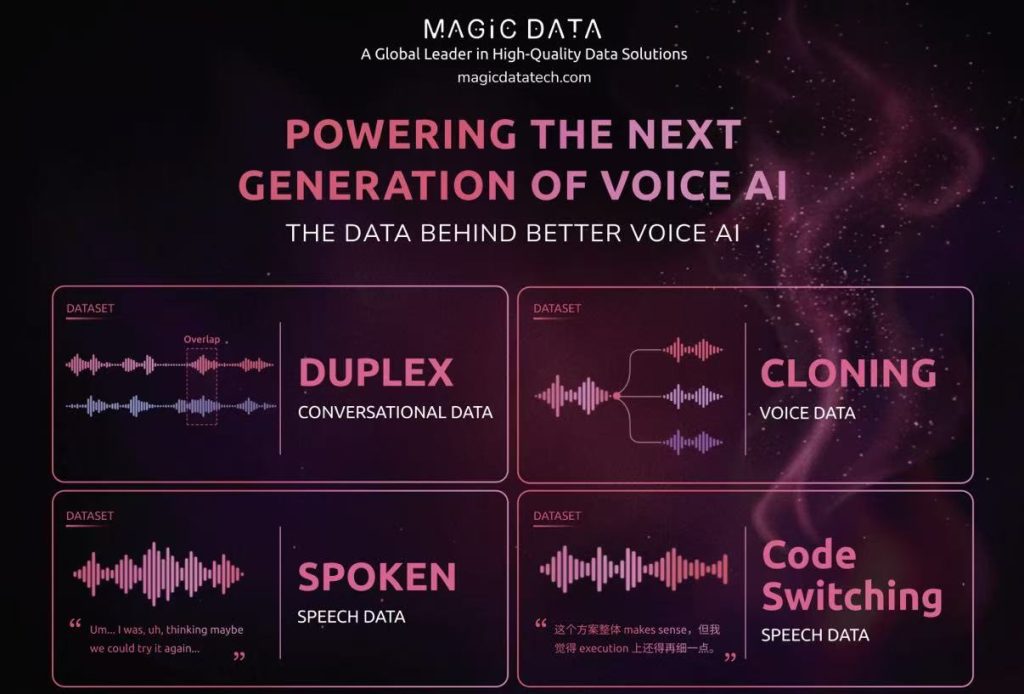
The message from INTERSPEECH 2026 is clear: the next frontier for Voice AI is not simply building "machines that can speak", but creating "systems that can genuinely engage in human conversation". Model architectures, latency, and on-device inference all matter, but the biggest challenges ultimately lie in the availability of authentic conversational data and the development of robust evaluation frameworks.
